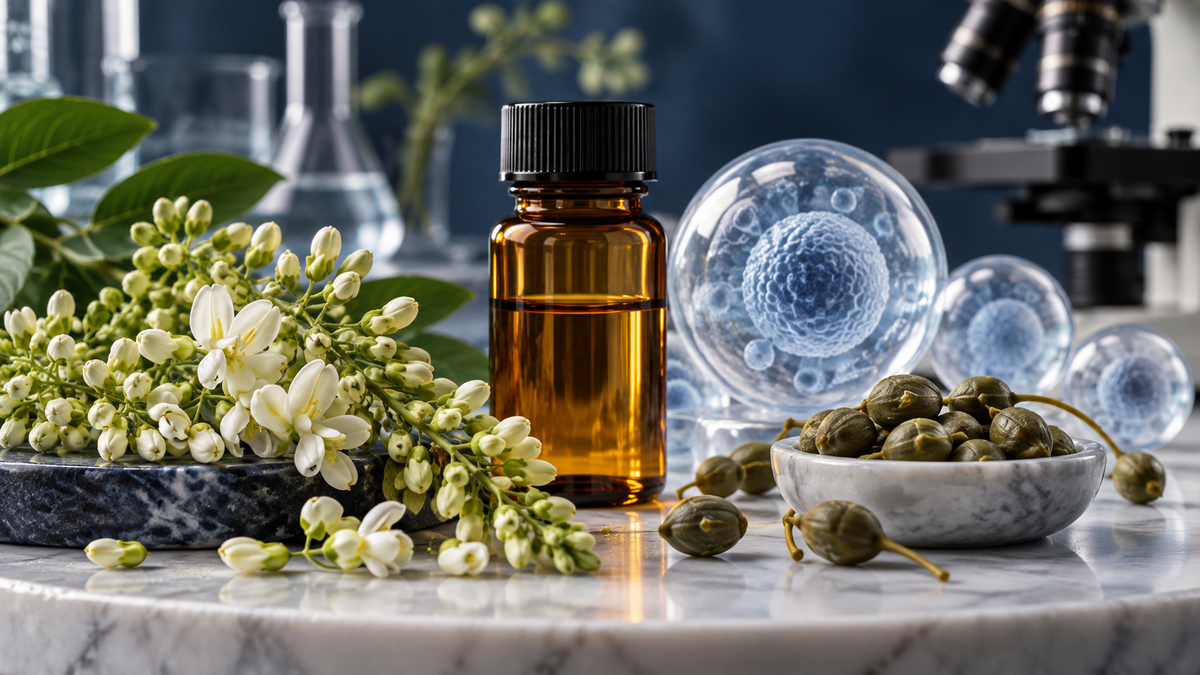
Skin-longevity research asks what happens to the cells that maintain tissue over time. Quercetin enters that conversation through research on plant polyphenols and cellular senescence. The subject is fascinating enough to explain without turning every capsule into a “zombie-cell cleaner.”
In this guide
Meet quercetin
Quercetin is a plant flavonoid studied in experimental work on oxidative stress, inflammatory signaling and senescence. The questions researchers investigate include how cells respond to stress and how their signaling affects surrounding tissue.
What the human research actually tested
A small 2019 open-label pilot gave nine people with diabetic kidney disease a combination of dasatinib and quercetin for three days. Researchers observed changes in senescence-related measures in tissue and blood. The trial investigated the drug-and-quercetin combination in this specific clinical population. Hickson et al., 2019.
The important practical distinction is the regimen. The study used a prescription drug alongside 1,000 mg quercetin; PAG NAD CORE contains 250 mg quercetin dihydrate extract per daily serving and no dasatinib. These are distinct regimens with different research questions.
Why the topic belongs in a skin-longevity library
It broadens the conversation from appearance alone to the cellular environment. To follow that story, start with collagen remodeling, then explore NAD+ and cellular energy. Each page answers a different question, with the evidence attached to the claim it supports.
How PAG LABS uses quercetin
PAG NAD CORE supplies quercetin dihydrate extract from Sophora japonica whole flower bud. We selected it as the plant-flavonoid component of a formula that also contains direct NAD+ and a standardized resveratrol source. All three amounts appear on the label.
For someone comparing products, that means you can inspect the actual ingredient and serving rather than rely on a proprietary blend. It also makes it easier to discuss the formula with a healthcare professional.
What to check before buying
- The ingredient form and daily serving amount.
- Whether a cited study tested quercetin alone or a combination.
- Whether the outcome was a tissue marker or a visible skin change.
- Whether the routine and precautions fit your circumstances.
Questions about quercetin
Does the study show fewer wrinkles?
No. It explored senescence-related measurements in a small disease population.
Why include an ingredient with emerging skin research?
PAG LABS offers a transparent supplement for customers interested in healthy-aging research. That is a different purchase decision from choosing a clinically validated wrinkle treatment.
Can I copy the research regimen?
Do not copy a dasatinib regimen as self-treatment. It involves a prescription medicine and medical supervision. For supplements, follow the label and obtain advice about medication interactions.
Explore the formula: PAG NAD CORE — ingredients, serving size and the 90-day protocol.
Published by PAG LABS, the brand behind PAG NAD CORE. Updated September 13, 2026.
Keep the comparison clear

For the wider context, explore the research table and our guide to comparing supplement labels.