Skin is living tissue. Its daily work depends on cellular energy. That is why NAD+ has become a compelling subject in skin-longevity research—and why understanding the molecule is a useful first step before choosing a supplement.
In this guide
- What NAD+ does in the body
- Why skin researchers study it
- NAD+, NR and NMN: read the actual molecule
- What a meaningful skin result would look like
- How to choose with more clarity
- The PAG NAD CORE approach
- Quick questions
- From a promising idea to a useful comparison
- Read the evidence by its actual endpoint
- Turn the research into a clearer choice
- Choose your next step
What NAD+ does in the body
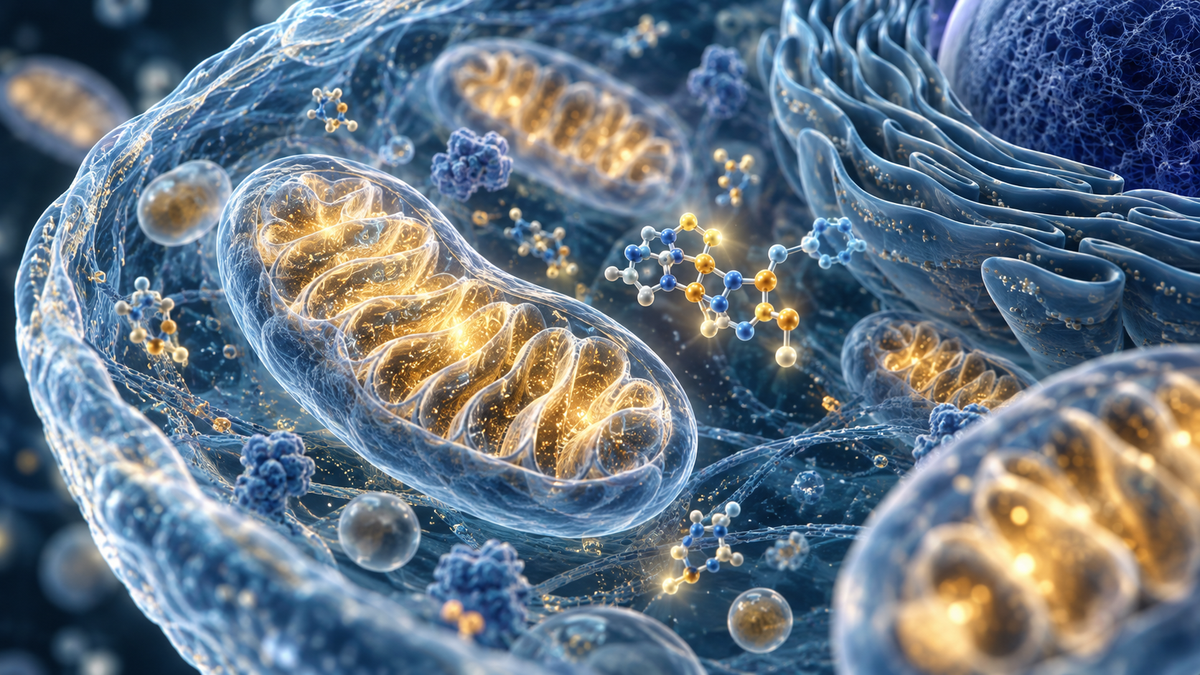
NAD+ stands for nicotinamide adenine dinucleotide. It helps transfer electrons in energy metabolism and serves as a substrate for enzymes involved in cellular regulation. Sirtuins and PARPs are among the enzyme families that use it. These are roles of NAD+ within cells; they should be distinguished from benefits demonstrated after taking a capsule.
Why skin researchers study it
A skin-focused review links NAD metabolism with cellular bioenergetics and responses to solar and oxidative stress. This puts NAD+ at the intersection of energy and maintenance biology, two relevant areas when studying how skin changes over time. Oblong, 2014.
For readers, the useful shift is to think beyond the appearance of a line. Skin is a tissue with metabolic needs, environmental exposures and ongoing remodeling. Our guide to intrinsic aging and photoaging explains how those processes overlap.
NAD+, NR and NMN: read the actual molecule
| Molecule | Identity | What to look for |
|---|---|---|
| NAD+ | The coenzyme itself | Studies of the specific direct NAD+ formulation |
| NR | Nicotinamide riboside, a precursor | NR-specific dose, population and outcome |
| NMN | Nicotinamide mononucleotide, a precursor | NMN-specific dose, population and outcome |
Human precursor studies are useful evidence that aspects of the NAD pathway can be influenced. A 2026 systematic review found consistent effects of oral NR and NMN on NAD-related biomarkers, with less consistent effects on broader functional outcomes. These findings concern the studied precursors, not a direct NAD+ product. Gallagher and Emmanuel, 2026.
What a meaningful skin result would look like
For a cosmetic goal, look for measured changes in wrinkles, hydration or elasticity, alongside the formulation, duration and comparison group. A blood biomarker answers a different question. Direct oral NAD+ remains an emerging option for visible skin outcomes; the research cited here does not establish wrinkle reduction from PAG NAD CORE.
How to choose with more clarity
- Read the identity: a general “NAD booster” label can conceal meaningful differences.
- Read the amount per serving: compare daily servings rather than bottle size.
- Keep the routine practical: consider capsule count, repeat purchases and the full cost.
- Match the study to the goal: biological relevance and visible results deserve separate attention.
The PAG NAD CORE approach
PAG NAD CORE contains 500 mg direct NAD+ per two-capsule serving, alongside 250 mg quercetin dihydrate extract and 150 mg Japanese knotweed extract standardized to 98% resveratrol. Each bottle provides 30 servings. The three-bottle protocol makes a 90-day routine easy to organize.
The formulation reflects our interest in cellular biology and plant polyphenols. For the reasoning behind the other ingredients, read quercetin and cellular senescence and resveratrol and skin research.
Quick questions
Is the NAD+ in PAG NAD CORE actually NR?
No. The current label lists nicotinamide adenine dinucleotide itself.
Why a 90-day routine?
It provides three consecutive 30-day supplies: two capsules a day, with all three bottles ready from the start.
Can I combine it with skincare?
The product is positioned as an optional addition to skincare. Review supplements with a healthcare professional when taking medication or managing a medical condition.
Explore the formula: PAG NAD CORE — ingredients, serving size and the 90-day protocol.
Continue reading: Can supplements support the biology behind glass skin?
Published by PAG LABS, the brand behind PAG NAD CORE. Updated September 13, 2026.
From a promising idea to a useful comparison
The strongest way to understand NAD+ for skin is to follow three questions: what does the molecule do in cells, what changed in a human study, and which formula are you considering? These questions connect the science to a buying decision without losing the detail that makes the science useful.

Read the evidence by its actual endpoint
An instrument measuring blood metabolites answers a biochemical question. Standardized skin photographs, elasticity measurements or water-loss measurements answer different questions. A personal report captures an experience. Each can be informative when its purpose is clearly identified.
Our eight-entry evidence map names the study design, participants, route and outcome so you can check the link between an interesting finding and a product choice.
Turn the research into a clearer choice
Start with the ingredient name. Then compare the daily serving, the other ingredients, the quality information available and the price of a full routine. PAG NAD CORE makes those formula and serving details visible: direct NAD+ with quercetin and a standardized resveratrol source, in a 90-day supply.